The Stall Fee Was Never the Expensive Part: A Christmas Fair Ledger
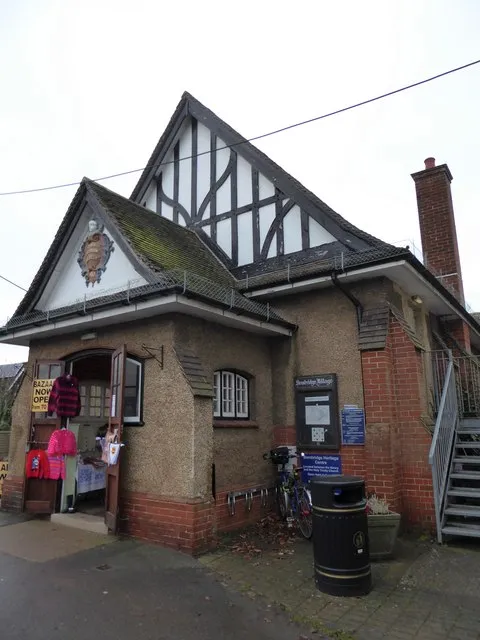
Photo: Basher Eyre , CC BY-SA 2.0, via Wikimedia Commons
There is a particular sound a print makes when someone decides not to buy it. Card settles back onto the tablecloth, a small apologetic tap, and then they're already turning towards the next stall. Four weekends of village halls and church rooms last winter taught me to hear it from two tables away, and, more usefully, to stop flinching at it.
I don't do this full time. I make lino cuts, small runs of prints, a couple of thin books, and until recently my entire pricing strategy was squinting at other people's stalls and copying whichever number looked confident. So when the 2025 Christmas circuit came round I did the unglamorous thing and kept a ledger: every fee, every hour, every £6 card sale. What follows is that ledger, roughly unedited, plus the four things it changed my mind about. This year's season starts for me in a fortnight, and I'd rather walk in with a plan than a vibe.
Four fairs, one spreadsheet
The circuit was small and mostly local: a village hall on the edge of a Shropshire market town; a church hall on a Friday night in a Leeds suburb; a school PTA fair; and a two-day town centre market that felt like the big league until I saw the invoice for the pitch.
| Fair | Table fee | Hours (travel, set-up, pack-down included) | Take | Take per hour |
|---|---|---|---|---|
| Village hall, Saturday | £35 | 14 | £412 | £29 |
| Church hall, Friday evening | £50 | 11 | £188 | £17 |
| School PTA fair, Sunday | £25 | 12 | £530 | £44 |
| Town market, two days | £145 | 32 | £1,024 | £32 |
| Totals | £255 | 69 | £2,154 | £31 |
Then the costs nobody puts on the stall: stock and materials £410, bags and tissue £38, mileage and parking £54. Net: £1,397. Across 69 hours that's £20.24 an hour, before tax, before I've costed a single hour of the making itself. Not a disaster. Also not a business — it's a moderately good shift, and I only know that because I wrote it down.
The table fee is the least interesting number on the sheet
The £145 pitch took nearly double what the £35 pitch did, but per hour it was worse. The £25 PTA fair beat everything. What actually predicted a good day wasn't the fee or the postcode; it was footfall, timing, and whether people had come out to spend or to drink mulled wine and go home at eight.
A Friday evening in a church hall sounds lovely. It is not a shopping slot. It's a social slot with a raffle. That £50 bought me eleven hours of my life and £188 in sales, and I'd have done better staying at home and emailing three stockists.
For next season I have two questions for every organiser, and neither is about the fee: how many people came through last year, and what time does the bar open?
The £15 wall is real, and it has a door
My £18 prints sold steadily. My £45 framed versions, which are better in every way, did not. Cards at £3.50 and a three-for-£12 bundle did more work than everything else combined — not for the money, but because they let someone buy from me for the first time without making a decision.
The framed pieces went eventually, but not to people who were deciding. They sold to people who'd bought a print the year before and had come back. That's a slower machine than a Christmas fair, and it doesn't fit into a Saturday.
People who pick things up are checking one of two things
I watched a lot of label-checking from behind my table. Almost nobody was checking whether it was expensive. They were checking whether it was a print or an original, and whether I'd made it. Both questions have answers, and both belong on a small card next to the work, not in my mouth after an awkward pause.
The put-downs weren't rejections of the price. They were people declining to do homework at a fair.
The last forty minutes are dead
Every fair, without exception, died at about ten to the hour. The last stretch of a Christmas market is the same twelve people walking past in the other direction with a Christmas tree. I used to stay out of politeness. Now I pack the small stuff first, keep the float separate, and I'm in the car within twenty minutes of the announced close. That's worth roughly two hours a weekend across a season, and two hours at the end of a fair is not the same value as two hours at the start.
The bit that's hard to write down
Somewhere in the third weekend I noticed I'd started pricing to avoid the tap on the table. I'd rounded down. I'd knocked a tenner off for someone friendly. I'd apologised for the cost of framing three times in one afternoon. None of that is generosity; it's flinching, and it's the most expensive habit on the stall by a distance.
The prints that did best all season were the ones where I'd written the price and then stepped back. Confidence isn't a marketing trick — it's just what's left when you've done the arithmetic and stopped treating every browse as a verdict on you.
A checklist for the next circuit
- Ask for footfall and timings before you ask about the fee, and get both in writing where you can.
- Work out your break-even in units, not pounds: I needed 31 cards to cover a £50 pitch with travel.
- Bring a card reader that survives a weak signal, plus a £40 float in coins and fives.
- Set a floor price in advance and don't negotiate below it after 2pm.
- Put the process on a card beside the work: hand-cut lino, printed in the kitchen, edition of 30.
- Have a cheap entry point that isn't a discount — bundle it, don't knock it down.
- Photograph everything during the quiet hour, not at pack-down.
- Write the ledger the same evening, even if it's a note on your phone. You will not remember which fair was which by January.
I'll report back once the 2026 season is done. The spreadsheet is open, the float is bagged, and I've promised myself I'll only round down if the person asking is under ten.