One Brass Lever and a Borrowed Generator: Notes From a Market Town Switch-On
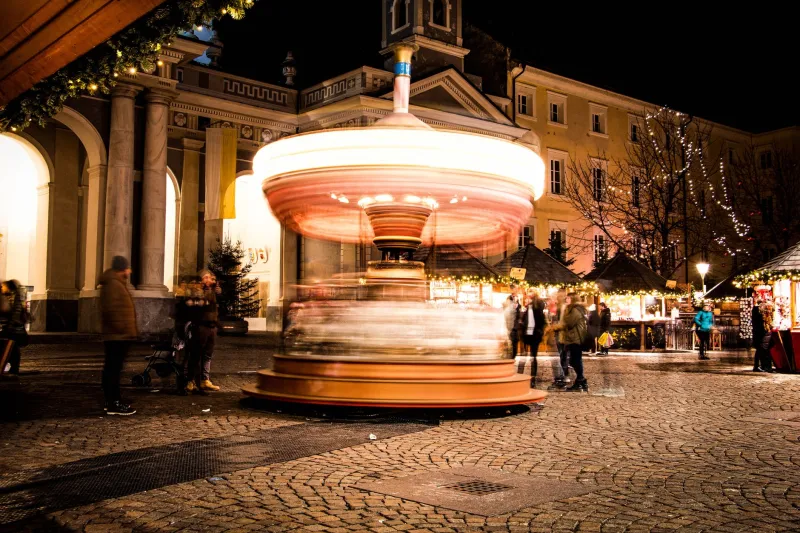
The lever is the first thing you notice. Not the tree, not the lights, not the slightly wonky star that has clearly been repaired with cable ties since about 2011. The lever: a brass-handled thing bolted to a sheet of plywood, painted the same green as the railings, and wired to a borrowed generator with a cable that a local farmer had to be talked into lending.
I got to the square at ten past four on a Friday in November, half an hour before anything was due to happen, and there were already two hundred people there. By five o'clock I'd have put it at seven hundred. No stage, no ticketing, no sponsor banners. One brass lever, one plywood podium, and a crowd that had turned up because the whole town knows the routine.
I've been going to this thing for years. This is the first time I've stood at the back and watched it the way I'd watch a piece of work, because I've spent most of 2026 trying to make my own projects do more with less and this lot have been quietly doing it, unpaid, for decades.
Fifty people, one plug
I cornered Janet, who has chaired the lights committee for fourteen years, somewhere between the mulled punch and the raffle table. She was wearing two coats and holding a clipboard with a printed running order on it, laminated, because of course it was.
"Fifty-one of us this year," she said. "That's marshals, the choir parents, the two lads who do the ladders, the woman who does the insurance paperwork, and Ron, who turns up every year and does whatever needs doing without ever being asked."
I asked what the total spend was. She looked at me like I'd asked her to undress.
"Six hundred and twelve pounds," she said, eventually. "That's lights replacement, the public liability, the licence, a hire fee for the barriers and the generator fuel. Everything else is donated. The tree is donated. The PA is donated. The mince pies are donated, and I'd rather you didn't ask how many were eaten before the switch."
Six hundred quid. Seven hundred people. I've spent more than that on a single print run and got considerably less atmosphere out of it.
Where the money actually went
What struck me, going through the numbers with her afterwards, is that the committee is ruthless about where they don't spend.
- No new lights on the tree. The same sets, tested in October, with three strings replaced.
- No printed programmes. A single A-board and the town Facebook page.
- No paid performers. The school choir, the brass quartet from the church, and a woman from the next village who sings and won't take a fee.
- One hire: the barriers, because the council insists, and the insurance won't budge on it.
The one thing they do spend on, every single year, is the moment of the switch itself. Proper PA, borrowed but well maintained, and someone whose only job on the night is to count down at exactly the right second.
"That's the bit people remember," Janet said. "They don't remember that we didn't have a brass band. They remember the countdown. So we protect the countdown and we let the rest of it be whatever it is."
That is, I think, the single most useful sentence I've heard this year.
Sequence is the whole trick
Here's the running order, more or less verbatim from the laminated sheet:
- 16:00 — choir arrives, marshals in position, generator checked twice.
- 16:30 — school choir, four songs, no encores, no speeches.
- 17:00 — countdown from ten, switch, lights, applause, nobody talks over it.
- 17:10 — Santa arrives on the back of a tractor, which is a five-minute walk from the far end of the square and takes twenty minutes because of the crowd.
- 17:40 — brass quartet, mulled punch, shops open with late-night trading.
- 18:30 — raffle drawn, marshals start quietly dismantling.
The genius is not any individual item. It's the sequencing. Choir first while people are still arriving, switch at the point when the crowd is biggest and warmest from standing about, Santa as the slow-release bit that keeps everyone in the square rather than turning for the car park, shops open at the exact moment people have had a hot drink and are feeling generous.
Nothing is allowed to overrun. The choir does four songs whether the crowd wants five or not. That's discipline, not budget.
Let the crowd do the rest
At ten to five, a kid near me asked his dad when the lights went on. His dad said, "When we've all counted." And that's basically the whole business model. The committee didn't buy atmosphere. They built a structure that lets seven hundred people make their own.
There's a temptation, when you're running something small, to try and fill every gap yourself. More lights, more stalls, more stuff to look at. This lot do the opposite. They leave holes on purpose, and the town fills them: people bring flasks, people bring grandparents, people stand in the cold and talk to neighbours they haven't seen since last December.
Janet said something near the end that I wrote down on the back of a receipt: "We're not putting on a show. We're giving people a reason to be in the same place at the same time. The show takes care of itself after that."
Three things I'm nicking
Standing at the back in the dark, I worked out what I'm taking into the studio with me.
One hero moment. Not five nice things, one good one, properly lit and properly timed. For me that's the first image on a project page, and I've been guilty of burying it under three nearly-as-good ones.
Sequence, not quantity. Choir, switch, Santa, shops. Open with something warm, put the main event where the crowd is thickest, follow it with something slow, and don't let anything overrun. My portfolio doesn't have a running order at all, and it should.
Leave a hole for people to fill. A brass lever on a painted board invites a countdown. A slick video with a soundtrack invites nothing but a scroll. The scratchy, human, slightly wonky version is the one people stand in the cold for.
I stayed until the marshals started stacking barriers, which is the least glamorous half hour of the whole evening and the one that tells you most about an operation. Fifty-one people, no budget to speak of, one switch. The lights came on at 17:00 exactly. They'll go off again in January, and the committee will be testing strings in October, the way they always have.
If you want something to go and stand at the back of this winter, find your nearest volunteer-run switch-on and watch the running order rather than the tree. Take a flask. Take notes.