The Honest Queue: Six Sundays Selling Prints to People Who Weren’t Looking for Art
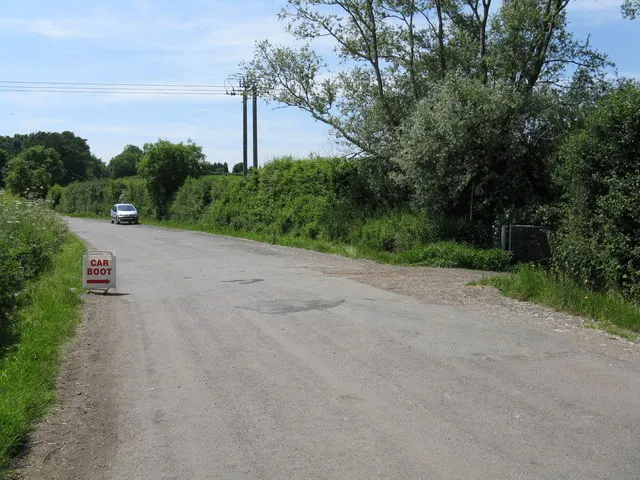
Photo: Whatlep, CC BY-SA 2.0, via Wikimedia Commons
On the first Sunday in September I loaded the boot with a pasting table, a folding chair, a flask and a really useful box of prints. The pitch cost £8. The field behind the leisure centre smelled of wet grass and bacon rolls. I told myself it was research. It was also a chance to clear a shelf and find out what people actually do when they meet my work without any context, any gallery lighting or any polite reason to be nice about it.
Six Sundays later I had a sunburnt neck, a tin of coins and a much better idea of which pieces deserve more of my attention. Here is what the table taught me.
The table, the flask, the plan
I kept the setup deliberately plain. A pasting table, a tarpaulin for the damp, a wooden crate to stand prints upright and a hand-written sign that said: Prints and small things. All my own work. Cards welcome, cash preferred. No portfolio. No framed pieces. No long explanation unless someone asked. I wanted the table to be a fair test of first impressions, not a performance.
The stock was a mix: A5 prints, a few A4 pieces, some misprints from a colour test, small lino cuts, a handful of cards and a box of experiments that had never quite found a home in the studio. Prices ran from £2 to £20. I had a rough idea of what I thought each thing was worth. The car boot had other ideas.
What got picked up first
The first thing people reached for was almost never the thing I was proudest of. It was small, bright and easy to understand at arm’s length. A little blue harbour print went first every week. A bold black-and-white type piece did well. Anything with a dog on it caused a small traffic jam. People liked things they could pick up with one hand, turn over and imagine on a kitchen wall or a downstairs loo shelf.
The misprints were interesting. I had bundled them into a £2 box expecting them to be ignored. They were not. People liked the honesty of them. One woman bought three because, in her words, “they look like proper printing, not a photocopy.” That was a useful nudge. The thing I had dismissed as scrap was reading as authentic work to someone else.
What nobody touched
The larger framed pieces sat there like furniture. They were not bad. They were just too much to take in while standing in a field with a dog on a lead and a fiver in your pocket. The subtle grey abstractions also struggled. People would pick one up, look at it, turn it over, put it down and move on. The text-heavy pieces needed a sentence of explanation before they made sense, and at a car boot sale you get about two seconds.
That was the first proper lesson: if a piece needs a caption to work, the piece is not doing enough on its own. Or at least, it is not doing enough for a table where nobody came looking for art. That does not make it bad. It just means it belongs somewhere else, with a different frame and a different audience.
The questions were the real data
The questions were better than the sales. “Did you make this?” came up constantly. “Is it a photo?” came up a lot. “Will it fade in a bathroom?” was a good one. “Have you got it in blue?” was another. “Do you do a bigger one?” came up nearly every week about the same two prints.
I started writing the questions down on the back of my price list. By week four I had a pattern. People wanted to know the work was mine, they wanted to know it would survive normal life, and they wanted a size or colour that fitted the space they already had in mind. None of that is glamorous. All of it is useful. If I hear “have you got it in blue?” six times, that is not an accident. That is a product brief with a queue attached.
What people paid, and what that told me
A fiver was the comfort line. Two for a fiver moved stock. A single print at £3 was an easy yes. At £10 people wanted a mount, a bag and a bit of a story. At £20 they wanted to know it was not going to curl up by Tuesday. Nobody at a car boot sale was offended by a price, but they were very clear about what felt like an impulse and what felt like a decision.
That changed how I think about pricing. The same print can be a £3 impulse buy in a crate and a £15 framed thing on a wall. The work has not changed. The context has. So the question is not “what is it worth?” in the abstract. It is “what job is it doing here, and what does it need around it to do that job properly?”
What I’m changing in the studio
I came home with a list, not a ledger. I am making more of the small harbour pieces. I am doing a blue version of the one everybody asked about. I am keeping a cheap box for misprints and experiments, but I am labelling it better so it reads as a choice, not a bin. I am also going to stop taking framed work to informal events. It is too heavy, too precious and too slow.
The biggest change is attention. The car boot did not tell me what was good. It told me what was legible. Those are different things, but they overlap more than I expected. If people keep reaching for a piece, asking about a size or coming back to the table for a second look, that is worth listening to. It is not a mandate. It is a signal.
I would do it again. Not every Sunday, and not instead of proper selling. But six mornings at a pasting table gave me something a spreadsheet never could: a queue of people with no reason to be polite, telling me exactly what they saw.