Twelve Months, One Urn, No Agenda: Notes From a Church Hall Makers' Tea
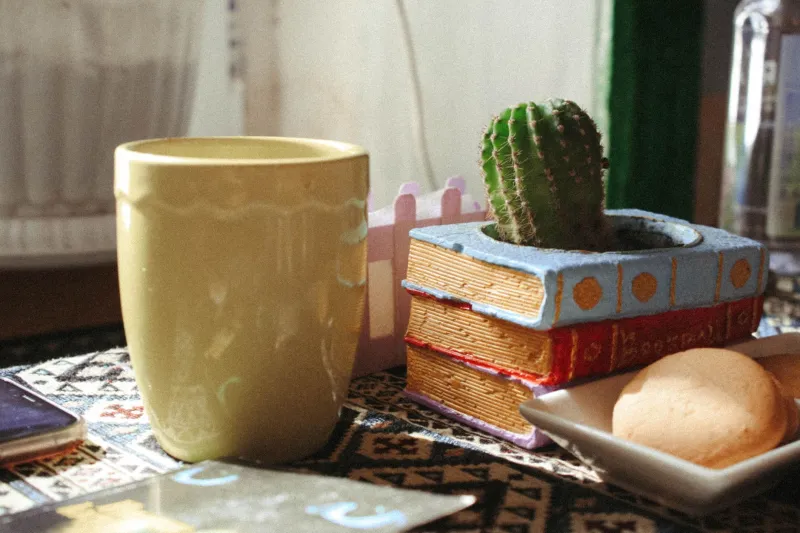
The urn cost me £18 from a man in Doncaster who described it, accurately, as "a bit temperamental but she'll get there." She took twenty-two minutes to boil, which is roughly the length of time it takes to arrange forty mismatched mugs on a trestle table and then stand there wondering whether anyone would actually come.
That first evening, three people came. One of them was the vicar's husband, who I don't think counts, but he drank two cups and helped me stack chairs, so I've counted him ever since.
The reason for the whole thing
I'd been working alone for about three years at that point. Kitchen table, radio on, a laptop and a cutting mat. And the thing I kept missing wasn't the work itself — it was the sound of other people making things badly and not apologising for it. The scrappy bits. The "oh, that didn't work, hang on" bits. You don't get that on your own. You get a very tidy workflow and a slightly strange relationship with your own thoughts.
So I booked the church hall off the high street — second Thursday of the month, seven till nine, £14 a session — and I put a sign-up sheet by the door with a biro on a bit of string. The pitch was: no agenda, no talks, no fees beyond £2 in the tin for the hall and the milk. Bring whatever you're working on, or bring nothing and just have a brew.
I expected maybe a dozen regulars. What I got was something stranger and better.
The rotating cast
Over twelve months, roughly forty different people came through. Some once, some every single time. The ones who kept coming weren't the ones I'd have predicted.
There was a retired joiner called Malcolm who brought a box of offcuts every month and never quite got round to making anything with them, but was very generous with advice about sharpening. There was a ceramicist who drove forty minutes each way and told me on month six that it was the only evening in her calendar where nobody asked her what her "five-year plan" was. There was a printmaker who mainly came to complain, which was fine, because his complaints were funny and he always brought good biscuits.
And there was a woman who ran a small cake business and, in twelve sessions, never once made anything in the room. She talked. She listened. She was, genuinely, the glue of the whole thing. I stopped worrying about it around month four.
What actually got swapped
The honest answer is: not as much stuff as you'd think, and far more of the useful stuff than I expected.
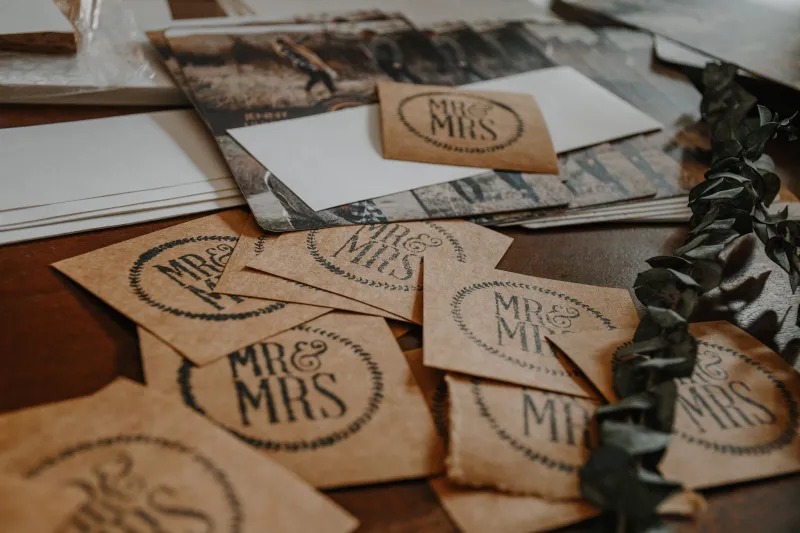
I saw a bag of wood ash change hands for a glaze recipe. I saw a screen-printing tip passed on in about ninety seconds that would have cost £200 in a course. I saw a phone number for a man who fixes bandsaws, which is worth more than most of my formal training. One actual paid commission came out of the room — a wedding invitation job, I think — and I've no idea whether it went well.
But the main currency was the low-grade, high-value stuff. Who's got a van this weekend. Does anyone know why my kiln is tripping the fuse. Is it normal to hate a project by week three. That sort of thing. You can't put it in a portfolio and you can't put it on an invoice, and it's the reason half of us kept turning up.
The awkward bits, because there were plenty
The August session where two people came, both of whom had come specifically to see someone else. The evening a man turned up with a stack of flyers for his own night and worked the room like a Lib Dem candidate. The cliquey corner that formed around month seven, which I broke up by moving the biscuit tin to the other end of the table — a trick I am oddly proud of.
The time I forgot the key and we all stood in the car park for half an hour in the rain, which somehow ended up being one of the better sessions.
The tea. I need to mention the tea. The urn gave everything a faint metallic tang that no amount of rinsing could shift. Several people told me, kindly, that it "tasted like a church hall," which I chose to take as a compliment.
What a room full of people actually does
Here's the thing I've been trying to get at for twelve months and can only now say plainly: the value wasn't in the networking. It wasn't in the skills exchange, though that was real. It was in the quiet infrastructure of it — knowing that on the second Thursday, there'd be a room with a light on and a kettle going and someone would ask how the thing was going.
That's not a business model. It's not even a community project, really, in the formal sense. It's just a slightly draughty hall with a sign-up sheet, and it turns out that's a fairly cheap way to keep a creative life from getting too small and too quiet and too much like a conversation with yourself.
If you're thinking of doing one
A few things I'd pass on, free of charge.
Charge more than £2, or you'll be subsidising the milk out of your own pocket by February. Name it something less worthy than "makers' tea" — I never solved this one, and I still wince slightly when I say it out loud. Put someone else on biscuits. And don't panic when the numbers dip; the people who matter will come back, and the ones who don't were probably only ever going to hand out flyers anyway.
The urn is in the shed now, still working, still temperamental. I keep meaning to sell it and I keep not doing it. Second Thursday of the month, if you're ever passing.