The Almost-Done Shelf: Thirty Days of Finishing and Letting Go

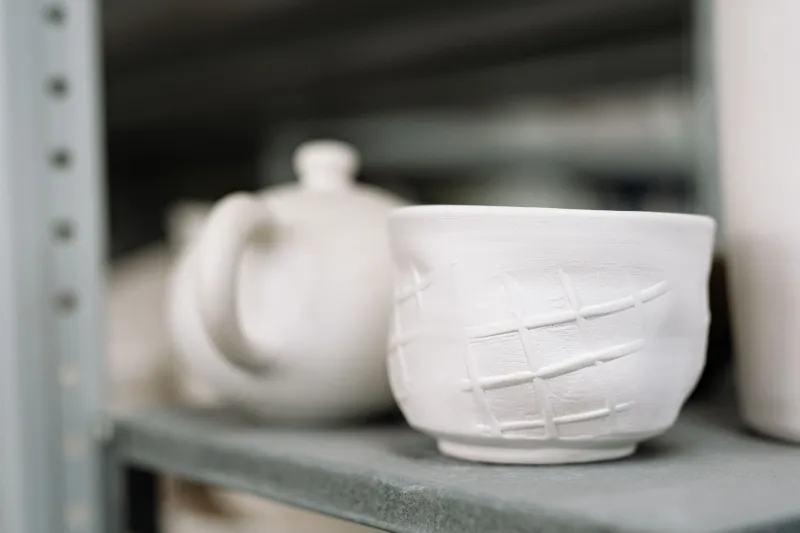
Photo: artist studio shelf with unfinished prints frames sketchbooks natural light UK, via www.masteroilpainting.com
On the first of October, I stood in the studio with a mug of tea and counted seven things that were nearly done. Not done. Nearly. A lino print with one colour still missing, a frame with a corner joint that never quite met, a sketchbook full of beginnings that had gone cold, and a small stack of prints that needed nothing more than a signature and a sleeve. There were also two repairs I’d been walking past for weeks and a box of paper samples I’d kept “for the right project”.
The rule for the month was simple: start nothing new. No fresh sketches, no experimental side quests, no buying a new blade because the old one was dull. For thirty days I could only move existing work forward or decide, properly, to let it go. I called it a finish-only month. By the second week I was calling it something less polite under my breath.
The rule and the loophole
I thought the difficult part would be resisting new ideas. It wasn’t. New ideas are easy to resist when you’ve got a shelf of almost-done work staring at you. The difficult part was that “finishing” is not one activity. Some jobs needed twenty minutes and a decision. Others needed a skill I didn’t have yet, or a conversation I’d been avoiding, or a piece of kit I’d lent to someone in the village and forgotten about.
The loophole, of course, was tidying. I spent a whole afternoon rearranging the drying rack and telling myself it was progress. It wasn’t. It was the same avoidance in a different jumper. Once I noticed that, I made a list on the back of an envelope: every unfinished thing in the room, what it actually needed, and whether I still wanted it to exist. That list was more useful than any timetable I’ve ever made.
What was actually in the room
There’s a particular kind of tiredness that comes from a crowded studio. It looks like indecision. You walk in with an hour to spare, look at the half-sanded frame, the unlabelled proofs, the pile of paper offcuts, and you make another cup of tea instead. Every object is asking a small question — what about me? — and by the time you’ve answered three of them you’ve got no energy left for the actual work.
I’d been calling that laziness. It wasn’t. It was decision fatigue wearing an apron. The finish-only month didn’t fix my character; it cleared the questions. Once each object had a next action written down, the room went quiet. I could pick up the frame, glue the joint, clamp it, and walk away. That was the whole job. It took eleven minutes. I’d been not doing it for five weeks.
Three questions before you finish anything
By the middle of the month I’d developed a rough test for the almost-done shelf. It isn’t foolproof, but it stopped me from polishing things that should have gone to the recycling centre.
First: would I start this today? Not “am I glad I started it once”, but if the idea landed in my lap this morning, would I begin? If the answer is no, it’s usually a leftover, not a project.
Second: does it have a home? A print with no wall, a card with no recipient, a frame with no picture — those aren’t unfinished, they’re homeless. Sometimes the kindest finish is to give it away or break it down for parts.
Third: is this a decision or a skill gap? A decision I can make in an afternoon. A skill gap needs a course, a phone call, or an honest admission that I’m not the person to finish it. Confusing the two is how work sits on a shelf for a year.
The things I let go
I let go of four things. A half-built display stand that was never going to survive a village hall draught. A set of test prints I’d kept because the paper was expensive, not because the images were any good. A sketchbook I’d been carrying around like a guilty conscience. And a commission idea that had died in the first conversation but which I’d kept alive out of politeness.
None of those felt like failure by the end. They felt like clearing a drain. The studio didn’t get emptier so much as more honest. The things that remained were the things I actually wanted to look at, and that changed the atmosphere more than any shelf tidy ever could.
What finishing actually felt like
Less dramatic than I expected. There was no choir. I signed the prints, sleeved them, and put them in the parcel pile. I glued the frame and hung it with a picture in it. I finished a small run of cards that had been waiting for a colour I’d already mixed. The work was ordinary. The relief was not.
By the end of the month I’d cleared the almost-done shelf and, more usefully, I’d stopped treating “finished” as a personality trait. It’s a decision you make in a room, with a list, on a Tuesday. The month didn’t make me more disciplined. It made me less confused about what was actually in front of me.
Would I do it again? Yes, but not every month. A finish-only month is a good reset, not a religion. The real lesson was simpler: if a project has been almost done for longer than it took to make, it’s probably waiting for a decision, not more time. Give it one, and get your studio back.