Stamped, Sealed, No Angle: What a Year of Notes With Nothing Attached Actually Did
There's a particular sound a project makes when it ends. Not a bang — more the soft click of a folder being closed, an email filed, an invoice marked as paid. And then, usually, nothing. You go from daily contact with someone to a companionable silence that neither of you quite knows how to break.
About a year ago I started breaking it deliberately. Not with a follow-up. Not with a check-in. With a note.
The rule I made in a Post Office queue
I was standing in the queue at a small Post Office in a market town, holding a parcel of prints, when it occurred to me that I'd posted things to clients all year and almost never posted anything to them afterwards.
So I set myself a rule, and I kept it deliberately narrow:
- After every project closes — paid, delivered, signed off — a card or a spare print goes in the post within two weeks.
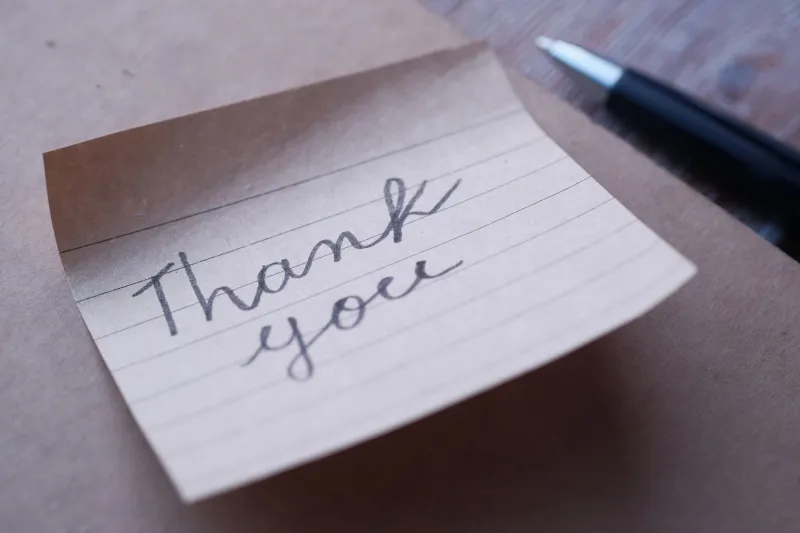
- It's handwritten. Not a template with a name swapped in.
- It has no ask. No availability mention, no 'do keep me in mind', no link to a portfolio. Just thanks, plus one specific thing I genuinely appreciated about working together.
- Second class. Always second class. Something about the slower stamp suits the gesture.
That's it. No system, no CRM field, no automation. A shoebox of cards from a shop that sells them three for a pound, a book of stamps, and a pen I actually like writing with.
What the ledger says
I kept count, because I'm the sort of person who keeps count. Thirty-four projects closed over the twelve months. Forty-one pieces of post went out (some projects got a print as well as a card). Roughly £38 in stamps, £22 in cards and envelopes, and one memorable afternoon spent queueing behind a man posting a tennis racket.
Of the forty-one, twenty-six got some kind of reply. Eleven were a warm one-liner and nothing more, which is entirely the correct amount of reply. Eight were longer — proper emails, one of them three paragraphs about a kitchen renovation that I now feel invested in.
And then there were the things I hadn't planned for:
- Six people came back with new work within the year. Five of those conversations started with their reply to the note, not with me mentioning anything.
- Three referrals came through, all of them described to the new client in roughly the same words: "He sent me a card afterwards, which I thought was lovely."
- One person asked to buy a second print of the piece I'd sent, for her sister.
- Two people asked whether I taught, having read the handwritten line about process I'd scrawled on the back of a card without thinking about it.
I want to be honest about those numbers, because they're the sort of thing that gets dressed up as a strategy. They are not a strategy. Six out of thirty-four is not a funnel. It's just that the notes happened to land in the same year as some work did, and I suspect a few of those conversations would have happened anyway, just later and more awkwardly.
The replies that surprised me
What I hadn't anticipated was the tone of the responses.
One client — a lovely, extremely brisk person who had spent the whole project communicating in bullet points — wrote back a full page. Turns out she'd been worried the whole time that she'd been difficult. The card gave her somewhere to say so.
Another sent a photograph of the note on her fridge, next to a school timetable and a takeaway menu. That photo is, genuinely, one of the nicer things that's happened to me in this line of work. It's easier to believe your work matters when you see it pinned up next to somebody's Wednesday.
A third posted back. An actual letter, on paper, with a stamp, thanking me for the thanks. We now write to each other about twice a year about absolutely nothing to do with design. I'd call that the single best return on 85p I've ever had.
The ones who never wrote back
Fifteen people didn't reply. I want to be clear that this is fine and also that I checked, more than once, whether it was fine.
It is fine. People are busy. People are embarrassed that they never replied to the last thing. Some people receive a card and think "how nice" and put it in the recycling because their kitchen is small. None of this is rejection; it's just life happening in the same postcode as your envelope.
The one thing I'd warn anyone trying this: don't let the silence curdle into a follow-up. The whole value of the exercise is that there's nothing attached. The moment you send a second note saying "did you get my card?", you've turned a gift into a chase, and everyone can smell it.
What it's actually cost me
Call it £60 across the year, plus maybe four hours of writing. That's less than most subscriptions I've cancelled and forgotten about. It has also, quietly, replaced the nervous scrolling I used to do after a project wrapped — that low-grade habit of checking whether the client seemed happy, whether the invoice had been read, whether the thing I built was still standing.
Writing a card closes the loop in a way that a spreadsheet can't. You can't put a note in the post and still be anxious about it. You've said the thing that needed saying. Whatever happens next is somebody else's to decide, in their own kitchen, in their own time.
If you want to try it
Start with the last three projects you finished. Not the biggest ones — the most recent ones, while you still remember something specific about them. Buy cards you'd be happy to receive. Write one true sentence about the work, and one true sentence about the person. Sign it. Stamp it. Walk to the postbox.
Then don't mention it. Not on a call, not on the website, not in a caption. The whole point is that it's post, not marketing.
Twelve months in, I'd put this above almost anything else I've changed about how I work. Not because of what came back — although some good things did — but because of what it does to the way I close a project. It's the difference between finishing something and finishing it well.
And if you're the person who never replied to mine: genuinely, no hard feelings. I hope the card's still on the fridge.