The Projects We Bury: Seven UK Makers on the Work That Never Makes the Portfolio
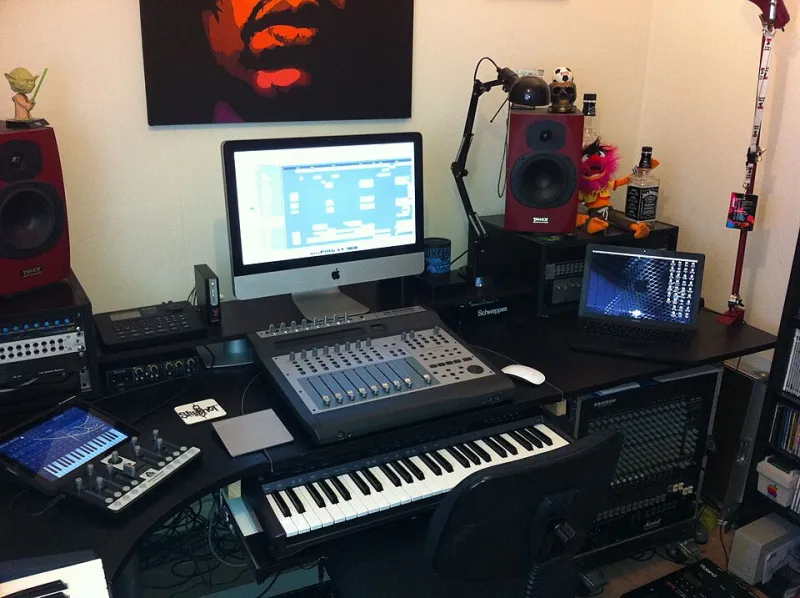
Photo: Pwoolfy, CC BY-SA 3.0, via Wikimedia Commons
On a grey November afternoon, I opened a folder on my laptop called OLD WORK. Inside were logos with too many gradients, a poster for an event that never happened, and a website I built in a weekend because I had convinced myself that speed was the same thing as instinct. I had not looked at any of it in years. I closed the folder quickly, as if someone might see over my shoulder.
That small moment of embarrassment is what prompted this piece. I asked seven UK makers — an illustrator, a ceramicist, a web designer, an animator, a bookbinder, a photographer and a textile designer — to talk about the worst thing they ever made. Not the funniest. Not the most technically disastrous. The work they would quietly remove from their own portfolio if anyone ever asked.
The response was immediate. Almost everyone had a story ready. What surprised me was not the failures themselves, but how clearly each person could trace their current taste back to the thing they would rather bury.
The illustrator who drew the wrong kind of clever
Priya, an illustrator in Leeds, described a children's book project from several years ago. “I made every page busy,” she said. “I thought detail was the same as generosity. Looking back, I was terrified of leaving space where a child might get bored. So I filled it.” The book was never published. The publisher went quiet, and Priya spent a month assuming her drawing was the problem. Eventually she realised the issue was pacing. “Now I draw fewer things, but I mean them more.”
The ceramicist who fell out of love with a glaze
Tom, a ceramicist near Stoke, still has the first batch of mugs he sold. “They were fine,” he says. “That was the problem. Fine is a very hard thing to build a practice on.” He had copied a glaze from a potter he admired, then spent months trying to make it feel like his own. The mugs cracked in the kiln, and the ones that survived looked like a polite imitation. “I hid them in a box under the bench. Then one day I used one for tea and realised I liked the weight. That was the first honest thing I had made in months.”
The web designer who shipped a template
Aisha, a web designer in Manchester, remembers a client site she built at speed. “It was all the tricks,” she says. “A slider, a parallax section, three fonts fighting for attention. I was so scared of being seen as simple that I made it impossible to read.” The client liked it. Nobody else did. “I took it off my portfolio almost immediately. But I kept the wireframes. They are a useful reminder that a portfolio is not a place to prove how many things you can do. It is a place to prove what you can leave out.”
The animator who overworked a loop
Gareth, an animator in Cardiff, made a short loop for a music night. He spent weeks on the movement of a single character, then exported it at a size that made all the detail vanish. “I watched it on a projector and felt my stomach drop,” he said. “All that time, and I had designed for the wrong viewing distance. Now I check every piece at the size it will actually be seen. It sounds obvious, but it changed how I start.”
The bookbinder who chose the wrong paper
Ruth, a bookbinder in Bristol, made a set of notebooks with a beautiful cover stock that would not take glue. “They fell apart as I was photographing them,” she laughs. “I had spent so long thinking about the cover that I forgot the book had to open.” She now tests every material twice before committing to a client project. “The worst work teaches you what you are romantic about. That is useful information.”
The photographer who chased a look
Callum, a photographer in Dundee, described a portrait series where every image was lit the same way because he thought consistency was the point. “I made twenty pictures that looked like one picture repeated,” he said. “I was scared of being inconsistent, so I made everything flat.” He now shoots a project first, then looks for the through-line. “If the only consistency is the lighting, I have probably avoided the real work.”
The textile designer who tried to be tasteful
Nia, a textile designer in Bangor, still cringes at a collection she made for a trade show. “I tried to make something that would appeal to everyone,” she says. “It appealed to no one. I had removed all the parts of my work that might annoy someone, and the parts that might annoy someone were the only interesting bits.” She now keeps a small jar of rejected swatches on her desk. “It is my taste, in an honest form.”
Why the discard pile matters more than the highlight reel
There is a particular kind of lie in a portfolio. Not a deliberate one, but a structural one. A portfolio shows the work that survived. It shows the decision that worked, the client who said yes, the project that arrived at the right moment. It does not show the version you deleted, the one you were secretly proud of, or the one that taught you what not to do again.
Most of the makers I spoke to said the same thing in different ways: the work they would hide is not proof that they failed. It is proof that their taste moved. The old work looks wrong because the current work looks more like them. That is not a reason for shame. It is a reason to keep a record.
A small exercise: the discard audit
If you want to test this for yourself, try a discard audit. It takes an hour and it does not require you to show anyone anything.
-
Choose three pieces of work you would not put in your portfolio. Old client work, abandoned personal projects, a file you have not opened in years. Do not choose the funniest ones. Choose the ones that make you wince.
-
For each piece, write down four things: what you intended to make, what actually happened, what you would keep if you had to salvage one small part, and one rule you now follow because of it.
-
Keep the notes somewhere plain. A page in a notebook, a text file, a folder called Evidence. The point is not to publish a confession. The point is to see the pattern.
-
Once a year, read the notes before you update your portfolio. They will tell you what you are actually trying to do, not what you think you should be doing.
The worst thing you ever made is not a secret. It is a record. It is the version of you that did not know yet. Put it in a folder. Look at it occasionally. Then close the folder and go back to the work that is still in front of you.