Three Libraries, One Month, No Studio: An Experiment in Borrowed Desks
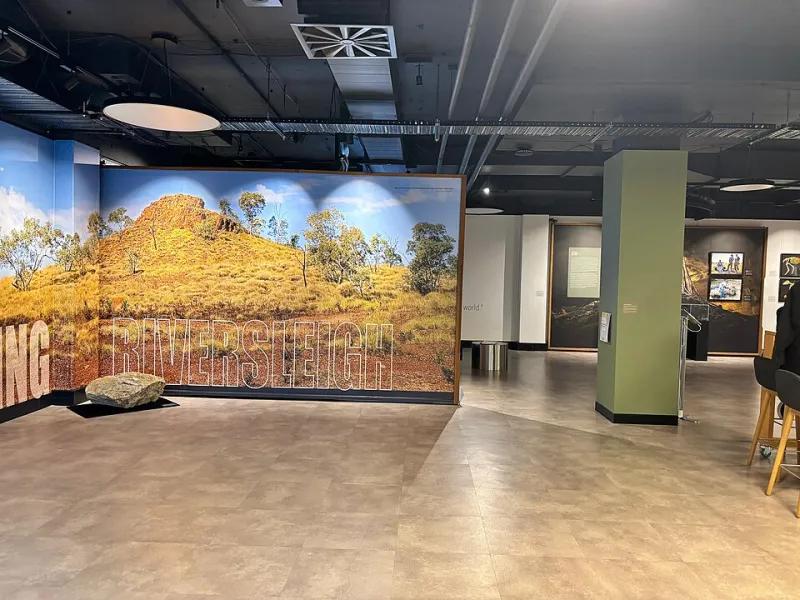
Photo: Ista Triana, CC0, via Wikimedia Commons
One Monday in September I put my studio keys in a drawer and didn't take them out for four weeks. The studio isn't dramatic — a spare room with a big desk, a lamp that buzzes, and a radiator that clanks like a man clearing his throat — but it's mine, it has a door that closes, and most of the work in this portfolio was made in it. For one month I worked instead at three public libraries, and I have opinions.
The rules I set myself
Simple ones, because I wanted to know whether this would survive contact with a real workload. No working from home between 9 and 5 on a weekday. At least four hours per library sitting. Take the actual jobs — roughs, emails, invoicing, the boring drawing practice — not a tidy little side project. Pay for my own printing. Buy a coffee from whichever café was nearest, because a library is not a co-working space and shouldn't be asked to be one.
Library one: the big city branch
North West city centre, four floors, a lift that smells of warm dust, and a reference section with chairs apparently designed for reading and very little else. I found a table near the local history shelves on the second floor and, to my surprise, nobody cared. That was the whole finding of day one: nobody cared. In a good way.
The focus that arrives when everyone around you is doing something entirely different is not like studio focus. There's no washing up, no fridge, no sofa. There's a man doing his tax return, two teenagers revising quietly, and someone reading every free newspaper in sequence. Nobody is going to ask what your side project is doing, because here it isn't a side project. It's just the thing you're doing at a desk, same as everyone else.
The downsides were concrete. I can't take a call in a library, so I stacked them into half an hour outside. The Wi-Fi at this branch was excellent, the sockets were all at floor level behind a pillar, and the two-hour limit on the main tables at busy times meant I moved twice in one afternoon.
Library two: the branch with the laminator
A suburban branch in a Leeds postcode. Smaller, warmer, one long table, a children's corner behind a low shelf, and — the detail I'll be thinking about for years — a laminator any member of the public can use for 40p an item.
I got through a set of client proofs, a print order, and about two hours of drawing I'd been avoiding for a fortnight. Something about the low-grade ambient noise of a branch library — the door, the printer, the toddler, the photocopier — is far easier to work through than silence. Silence asks you to be brilliant. A busy room only asks you to carry on.
This was also the library where someone finally asked what I was doing, and it was a nine-year-old who wanted to know whether I was an artist and whether I got paid. I said yes and sometimes. He said his auntie does nails and it's the same.
Library three: the market town one with two good desks
A small library in a Shropshire market town, open five days, staffed by two people and a volunteer rota. Two proper desks by a window, a radiator, a view of a car park. The strictest and best four hours of the month. The building closed at 5 and I could hear it closing from about 4.30 — chairs, blinds, the chat at the desk. That deadline did more for my afternoon than any app has ever managed.
What the librarians said
'People think we're going to tell them off,' said Rachel, who has worked in reference services for eleven years. 'We're not. We ask two things: are you comfortable, and have you got what you need. That's it. If someone wants to sit and write a novel for six hours, brilliant — that's what the building is for.' She was more measured about the practicalities. 'What we haven't got is storage. If your work needs to stay somewhere overnight, I can't help you.'
Elaine, a library assistant in a smaller branch, was blunter. 'It gets busy at three when the schools come out, and then it isn't a quiet space, it's a community space. Both are good things. They're just not the same thing.' She also, correctly, told me not to call her a librarian. 'I haven't done the qualification.'
The maker who never left
Tom, a bookbinder who has worked two days a week in his local library since the first lockdown, put it best. 'The studio is where I'm a business,' he said. 'The library is where I'm a person who makes things. I get a different kind of work done in each.' He carries everything in one bag, has never had a complaint, and clears his table if a family needs it. 'You just have to be a reasonable guest. That's the whole system.'
What actually changed
- I finished things. Four-week total: two client jobs on time, one long-avoided drawing series started, and — the real metric — no afternoon spent tidying the studio while telling myself it was work.
- My days got shorter and more deliberate, because a library has opening hours and I have a bus.
- I stopped mistaking my studio for a personality. It's a room.
- I got much better at ninety-minute blocks, because that's roughly how long a table stays free at a busy branch.
What it doesn't fix
It is not a studio. No storage, no ventilation for anything smelly, no sink, no way to leave wet paintings, no phone calls. It goes loud at 3pm and quiet at noon. It shuts for bank holidays and one morning a week for staff training. And it isn't free in the sense of costing nothing — somebody paid for that building and that staff, and pretending otherwise is the quickest way to lose it.
What it is, though, is permission. Permission to work in public without performing. Permission to occupy a desk for four hours without buying a round. Permission to be a person making something rather than a business with a laptop. For one month, three libraries did something my studio had stopped doing for me, and I've kept a library afternoon in the diary every week since. Not because it's better. Because it's different — and some weeks different is the only thing that moves the work.